Sugarcane, a symbol of tropical cultures, is not a single plant. It originated from several original species that, over time, were cross-bred to produce the modern varieties we know today. Before the era of hybrids, three major so-called historical species dominated cultivation. Each has its own particularities, strengths... and unique aromas.
Saccharum officinarum – the noble cane
-
Origin: New Guinea
-
Characteristics: very rich in sugar, historically the most used in sugar and rum production.
-
Part in modern hybrids: approximately 75%
-
Aromas: round and sweet juice, with notes of honey, fresh cane and tropical fruits.
👉 It is the queen of canes, still today the basis of most plantations.
Saccharum spontaneum – the wild cane
-
Origin: Southeast Asia
-
Characteristics: less sweet, very fibrous (therefore harder to press), but resistant to diseases and drought.
-
Part in modern hybrids: approximately 15%
-
Aromas: less sweet juice, more herbaceous, with mineral notes, dry hay, slightly bitter.
👉 This is the rustic cane, a survival gene for modern varieties.
Saccharum barberi – the Indian cane
-
Origin: North India
-
Characteristics: less rich in sugar, shorter cultivation cycles, good resistance to cold and diseases.
-
Part in modern hybrids: approximately 5%
-
Aromas: less sweet but more aromatic juice, with a vegetal and spicy profile.
👉 This is the caraway cane, which brings a particular aromatic touch to hybrids.
Cape Verde's black cane: a rare aromatic treasure
Among all sugarcane varieties, the black cane, called cana preta in Cape Verde, holds a special place. It stands out for its dark color, its aromatic complexity and its close link to the volcanic soil of the archipelago.
A cane recognizable at first glance
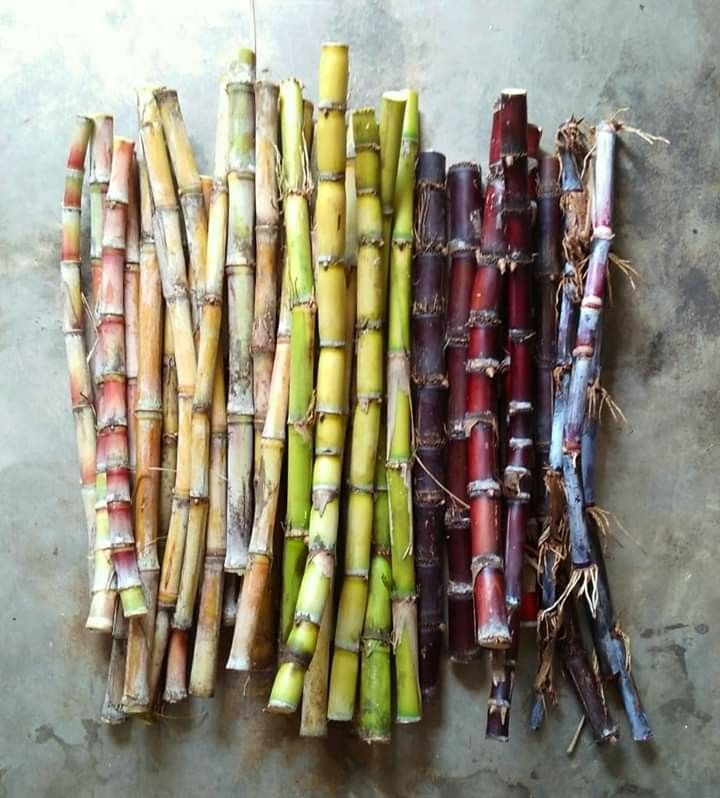
The black cane lives up to its name: its stem ranges from deep purple to deep black, which differentiates it from other more classic varieties (yellow, red or green).
This rare color makes it a very recognizable plant, almost iconic in Cape Verdean fields.
Exceptional taste qualities
-
Aromas: black cane is renowned for giving a very aromatic, rich juice, with notes of ripe tropical fruits, fresh cane and a beautiful roundness in the mouth.
-
Complexity: it allows the production of very fine tasting rums, sought after by connoisseurs.
👉 Unlike industrial varieties (which are more neutral), black cane prioritizes aromatic quality over yield.
The limitations of black cane
-
Low productivity: its yields are almost half those of other varieties.
-
Less resistant: it does not tolerate poor soils, droughts or epidemics well.
-
Demanding maintenance: it requires more minerals and care to grow well.
It is for these reasons that it has been largely abandoned in global industrial production.
Why it thrives in Cape Verde
Cape Verde offers black cane a unique environment:
-
Volcanic soils rich in minerals (calcium, potassium, magnesium, trace elements).
-
Ideal climate: abundant sunshine, constant sea breezes, temperate temperature.
-
Traditional methods: terrace cultivation, natural irrigation, compost, association with fruit trees.
👉 These conditions allow cana preta to reveal all its aromatic power, making Cape Verdean rum a unique production in the world.
A heritage to preserve
Black cane is more than an agricultural variety: it is a cultural and gustatory heritage of Cape Verde. While it remains little cultivated in the global industry, it continues to play an essential role in the identity of artisanal Cape Verdean rum, appreciated for its richness and authenticity.
Why are these species essential?
Even if they are now almost all replaced by more productive hybrids, these historical species form the genetic basis of modern sugarcane. They explain the aromatic richness of rums and make it possible to adapt cultivation to varied climates and soils.