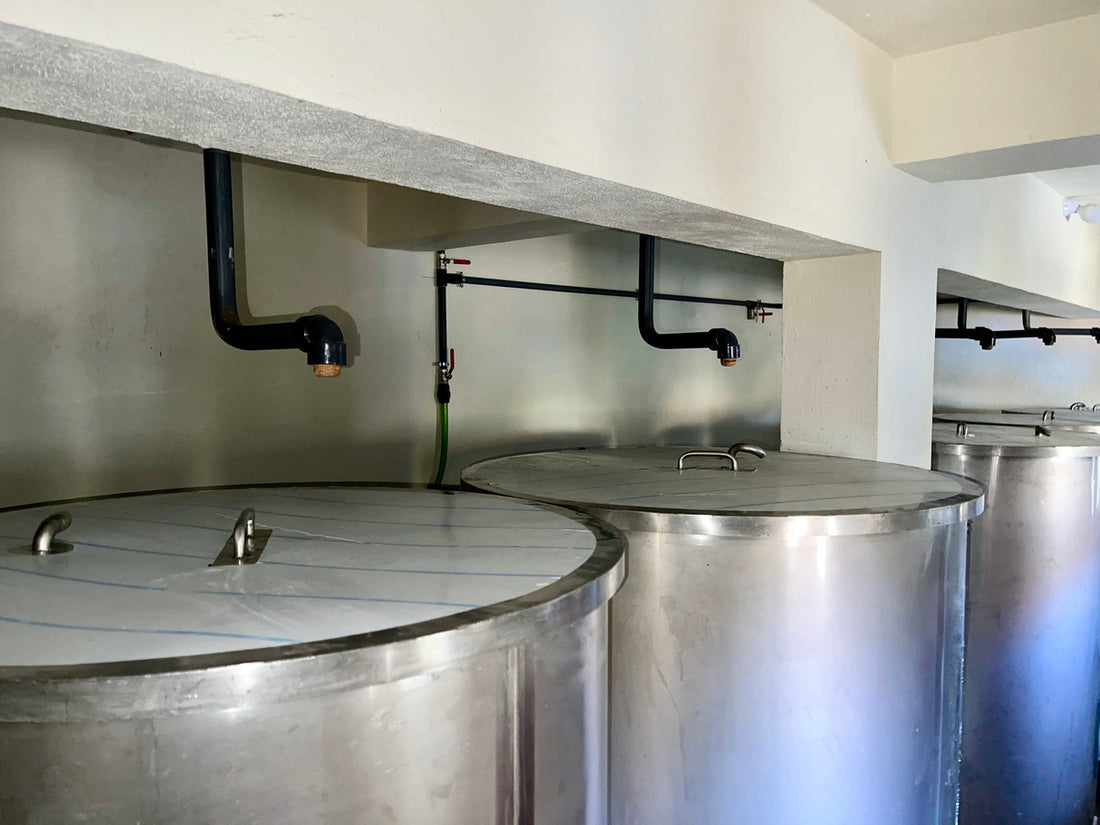
We use stainless steel tanks with a capacity of 800 to 1000 litres to collect the cane juice directly. Fermentation is a natural process where the sugar in the juice converts to alcohol. At JBEY, the fermentation time varies from one tank to another, ranging from a few days to a week. To aid fermentation, a portion of previously fermented juice is added. Thus, no chemical or external products are used to accelerate the process.
Exploring Fermentation: A Journey into the World of Microorganisms.
Fermentation, a fascinating and omnipresent process in our world, is much more than a simple biological phenomenon. It is an ancient and essential process that has shaped our history, our culture, and even our gastronomy. From the production of food products such as bread, cheese, and rum to the production of fuels and medicines, fermentation plays a crucial role in many aspects of our daily lives.
A Dance of Microorganisms
At the heart of fermentation are microorganisms, mainly yeasts, lactic acid bacteria, and molds. These living organisms feed on sugars present in raw materials such as fruits, grains, or milk, and transform them into a variety of final products, including alcohol, organic acids, and gases.
A Variety of Products
Fermentation gives rise to a multitude of diverse products, each with its own unique sensory characteristics. For example, the fermentation of cereal grains leads to the production of beer and bread, while the fermentation of milk produces dairy products such as yogurt and cheese. Similarly, the fermentation of sugarcane juice can lead to a range of alcoholic beverages; in our case, we have grog.
An Art and a Science
Fermentation is both an art and a science. Traditional artisans and producers have mastered the subtleties of this process over centuries, developing unique techniques and microbial cultures specific to their regions. Today, scientists are still exploring the mysteries of fermentation, discovering new strains of microorganisms and developing innovative methods to improve fermentation processes and final products.
A World of Possibilities
Fermentation offers a world of infinite possibilities. In addition to its traditional use in food and beverage, it has become a valuable tool in fields such as biotechnology and biofuel production. Microorganisms used in fermentation can also have medical applications, from antibiotic production to the bio-manufacturing of drugs and vaccines.
An Ancient Tradition, a Promising Future
Fermentation is much more than a simple biological process. It is a story of discovery, innovation, and tradition. As we continue to explore the mysteries of fermentation, we open new doors to a future where microorganisms can be our allies in creating sustainable, delicious, and health-benefiting products. By embracing fermentation, we honor the past while building a promising future for our constantly evolving world.
In summary, natural fermentation is a fundamental biological process used in the production of many products, including rum made from sugarcane. It relies on the action of microorganisms to transform sugars into alcohol and other compounds, thus contributing to the unique sensory and taste characteristics of the final product.